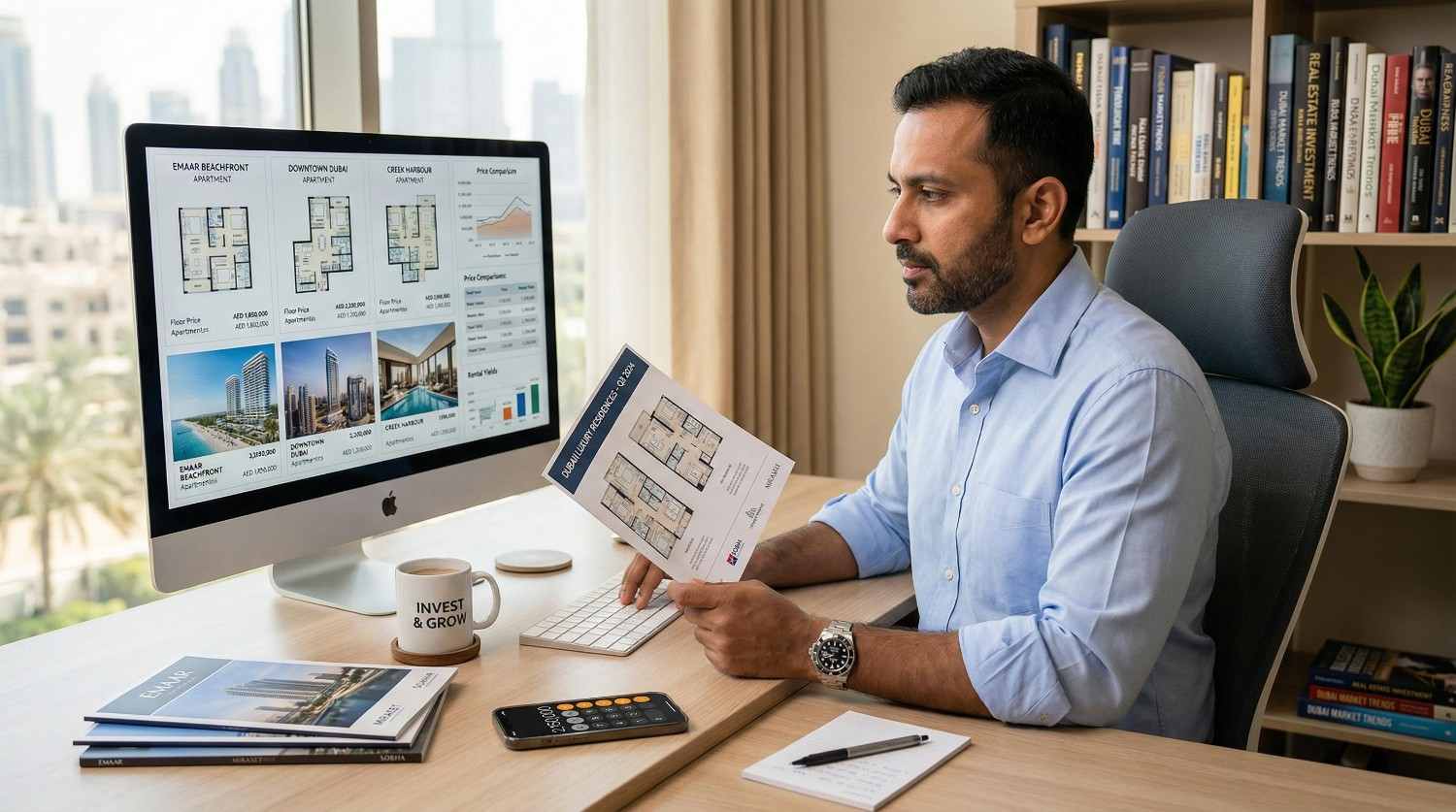
Dubai’s real estate market offers a wide selection of residential and commercial properties for buyers exploring rental income or long-term ownership. However, understanding a property’s investment potential involves much more than comparing its purchase price with the rent it might generate.
Transaction fees, service charges, maintenance, vacancies, property management, financing costs, and market conditions can all influence the financial outcome. A property that appears attractive based on its advertised rental income may deliver a very different result after expenses are taken into account.
In this guide, EVG Real Estate explains how to evaluate property investment costs, estimate rental returns, understand ROI calculations, and compare opportunities more carefully before making a decision.

Property investment involves purchasing real estate with the intention of generating income, potentially benefiting from changes in property value over time, or both.
In Dubai, buyers can explore several types of properties depending on their objectives.
Apartments: Options in central districts, waterfront communities, and established residential areas.
Villas and townhouses: Properties that may appeal to families and tenants seeking more living space.
Off-plan properties: Developments purchased before completion, with project-specific payment schedules and delivery risks.
Commercial properties: Offices, retail units, and other spaces with different leasing and operating considerations.
Each category has its own costs, demand patterns, risks, and ownership requirements. Before choosing a property, define whether your priority is rental income, long-term ownership, future resale, or a combination of these objectives.

The advertised property price is only one part of the amount you may need to invest. Understanding the total acquisition cost helps you compare properties on a more realistic basis.
This is the agreed amount payable to the seller or developer. Compare similar properties in the same area, taking into account size, condition, building quality, views, amenities, and other relevant features.
Depending on the transaction, additional costs may include Dubai Land Department fees, agency fees, trustee or registration-related charges, and other applicable expenses.
If you’re financing the purchase, consider the deposit, interest rate, lender fees, valuation costs, and repayment obligations. Financing can affect both your cash flow and your overall return.
Apartment and community owners may have recurring service charges. You may also need to budget for repairs, insurance, property management, furnishing, and other operating expenses.
Before committing, estimate:
A complete budget provides a more useful comparison than the purchase price alone.
Rental yield is a way to compare a property’s rental income with its purchase price or total investment cost. Buyers commonly distinguish between gross rental yield and net rental yield.
Let's use a hypothetical Dubai apartment to see how gross and net rental yield are calculated. These figures are illustrative only and do not represent a current property listing.
Even when a property has an attractive initial yield, several factors can influence the actual financial result.
Vacancy periods: A property may remain unoccupied between tenants, reducing collected rent.
Maintenance and repairs: Unexpected repairs or replacement of fixtures can increase annual expenses.
Service charges: Building and community charges can materially affect net rental income.
Property management: If you use a management service, include the applicable fees in your calculations.
Financing: Interest and repayment obligations affect cash flow and the amount of money you need to contribute.
Market changes: Rents, property prices, supply, and tenant demand can change over time.
Resale costs and timing: Selling may involve additional fees, and you may not be able to sell at your desired price or time.
A sound evaluation should consider less favourable scenarios as well as the expected outcome.

|
Factor
|
Property A
|
Property B
|
|---|---|---|
A structured comparison can help you understand which property better matches your requirements. A higher gross yield does not necessarily mean a better investment if the property has higher expenses, greater risks, or less suitable ownership terms.
Taking a careful, evidence-based approach can help you compare opportunities more realistically.
There is no single yield that is suitable for every property. Rental returns vary by location, property type, purchase price, occupancy, service charges, and other expenses. Compare current data and calculate net yield before deciding.
No. Gross yield compares annual rent with the purchase price. Net yield deducts relevant operating expenses and should use a clearly defined investment-cost basis.
No. Actual rent, occupancy, expenses, and market values can change. Estimates should not be treated as guaranteed outcomes.
Consider applicable acquisition costs, service charges, maintenance, vacancy allowances, management fees, and other operating expenses. Review financing costs separately when assessing cash flow.
Yes. You can prepare an estimate using the proposed purchase price, expected rent, estimated expenses, and possible resale scenarios. The result depends on assumptions and may differ from the actual outcome.
There is no universal answer. Compare individual properties using current rental evidence, acquisition costs, location, service charges, property condition, and your investment goals.
Helping you navigate Dubai real estate with trusted guidance, personalised service, and property opportunities tailored to your goals.
© 2026 EVG Real Estate